
Valerie Coskrey's Classroom Tools and Ideas


Lesson: Combining a Hobby with Biology
-- Turning Trees into a Work of Art Called a Bonsai
A Potential Career in the Making


On This Page: Defining Carrying Capacity

On this Site

Teacher Resources

monsiermonchat
© Marina COCHET - Fotolia.com

Turning Trees into a Work of Art Called Bonsai
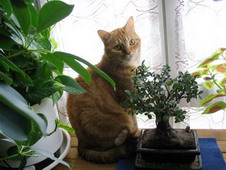
Viewing a beautifully shaped tree is to me a joyous experience. Maybe that is why I find the art of creating a bonsai so fascinating. Since I started looking at bonsais, I find myself searching for the perfectly shaped or most interesting trees; and imagining how it would look in a pot.

One year I decided to have my biology students use local flora to create a bonsai. I assembled wire, old dishes and pots, rocks and gravel, potting soil, fertillizer, scissors, clippers, instruction books, instruction worksheets and picture books.

Then I told the students that we were going to make gifts for their mothers. The plan was to pot the trees in September, and then grow, care, and train them, all while studying plant horticulture and botany during the months before taking them home. My students proudly displayed their weeks-old bonsais projects during open house. (We ended up taking the plants home for Thanksgiving because no one was available to care for them over the 10-day holiday.)
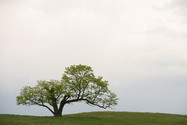
How involved wrere the students? Read on.
Read more about the bonsai unit.


Some got really excited about the art of shaping the trees. Students studied the branches, leaflets, and buds closely knowing that shaping the stems and maintaining the plant depended on this observation. They developed a vocabulary for speaking about the anatomy of plants. They planned ahead, developing critical thinking skills. They made mistakes, learned that knowledge is important, and that projects can still be completed-- the benefits of all hands-on learning. Also, those that were not overly concerned with learning biology for biology's sake found a reason to be involved, to look up information, and to create art.
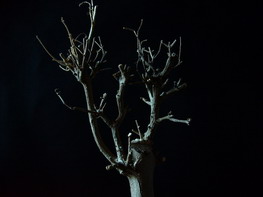
What does this have to do with careers? Growing bonsais can be a pleasurable hobby, the results of which sell for quite a bit. Check out these trees that are available for sale.


Untitled Document
from Bonsai Boy Also: Bonsai Trees Under $30

Bougainvillea (bougainvillea ¦glabraª)
- $ 9500.00
In 1768 Admiral Louis de Bougainville discovered the vine that bears his name. Through the ensuing years, this Brazilian beauty has assumed its rightful place as one of the most popular, spectacular and most beautiful tropical plants. The vibrant red and pink color comes not from three small white tubular flowers but rather from the three large paper-like bracts that surround each flower, hence the nickname "paper-flower". Great bonsai for indoors. 68 years old. 40" tall. Trunk diameter 9.5". Potted in a 23" ceramic blue oval container as shown. Crated and trucked - $300.00.

Willow Leaf Ficus-Small (ficus nerifolia/salicafolia)

- $ 24.95
Also known as Mexicana Ficus. Elongated, light green leaves have a striking resemblance to the popular weeping willow tree. This tree does particularly well indoors in low, moderate or high lighting conditions. 4 years old 5" - 8" tall Suitable 4 1/2"x 6 1/2" humidity tray is recommended. To purchase add $3.50. Shipped UPS 2-3 days - $10.95.

Of course, younger trees sell for much less.

Seeds of plants that make classical bonsais are sold. There is a market for the specialized tools. There are books and websites of photographs of bonsai. Students that get involved in growing bonsais, photographing bonsais, or just selling supplies are sure to find a market for their products, or a job with a nursery.

Quince, azalea, and forsythia are popular bonsai plants.
flowering bonsai (c) Nickolas Rjabow (NickR - Fotolia)

© NickR - Fotolia.com

Pruning bonsai is an art, as is wiring the stem to force a shape.
The unique shapes of bonsais are produced by careful pruning and wiring. Students will learn to recognize buds and new growth as they prune their bonsai. The artist in each student will emerge as students try to make pleasing shapes.

pruned bonsai (c)Carlos Domingo - Fotolia

 © Carlos Domingo - Fotolia.com

Compare this tree to a carefully shaped bonsai.
Cedar Tree

bonsai with grid background
© knostpix - Fotolia.com

As a bonsai afficionado, I find myself studying the shapes of trees. Such study has now grown into the hobby of photography. Others find the selling of photos of trees, both normal and bonsai, a lucrative pastime. I encourage you to share this interest with your students.
 

ShopPBS.Org


The Bonsai Unit: A Rundown of the Main Lessons of this Biology Science Unit


The Living Art of Bonsai Professor Amy Liang
- $ 24.95
This is the book to display on your coffee table. With 288 color pages it is one of the best books ever written on the subject of bonsai and includes a breathtaking photo gallery of bonsai, basic styles, group plantings, plant physiology, cultivation, propagation, transplanting and repotting and training and dwarfing -- in other words, everything the bonsai grower needs to know" 288 pages all in full color 81/2" x 111/4" ISBN 0-8069-8781-2 Shipped via UPS ground - $7.95
First I showed them a book on this ancient Japanese art form. We talked about what a bonsai is. One of my students asked about the trees in The Karate Kid without me having to bring it up.

At this point in the unit, if students do not make the connection themselves, I would refer to the Karate Kid movies, since bonsais are used so effectively in these movies. In fact, there is a juniper bonsai called the Karate Kid Tree.

Then we went for a walk through the edges of the woods behind our school. We found enough young seedlings for each of the students to pot their own tree. Back inside, we potted our trees temporarily to keep them for the next lesson. (Hindsight suggests that this potting session could have been done outside if I had set up a table and equipment in advance.)

There are local bushes that make bonsais, or seeds can be purchased. Kits are available, too. One bush that we used was privet hedge, but quince and rosemary are also easy to grow as bonsais. Ceder, maple, and pine seedlings were collected by my class; and grown with varying success.

Imagine this quince as a flowering bonsai,

© Matt Gregory - Fotolia.com
Actual image cropped and reduced by me, not Gregory; my apologies for any artistic imbalance. quince in bloom

During this lesson, I pointed out various aspects of nature and let the students observe nature as we walked. We discussed the shape and length of tap root systems so that when the person with the shovel dug up the seedlings, the roots were not damaged. We discussed the fungus in the local soils as being important to trees and that using a bit of the local soil in our potting soil had advantages and disadvantages.

The next lesson involved preparing the pots, pruning the roots, wiring the trees to the pots, and repotting. During this lesson, concepts of pruning for encouraging root growth, root-bound potted plants, fertilizers, drainage, the physics of bracing a plant along with the need to protect the bark, and other practical matters were discussed. Students were asked to visualize how they wanted the plants to grow, how the ground should look, and if a rock would be useful. Plans were made to create these visions.

Subsequent lessons dealt with plant care. Furthermore, the bonsai served as reference points for discussions in other units. Any time a student's plant could be used to illustrate a concept or serve as an example, that student was asked to display his tree so that I could point out the relative point. Growth rate experiments and other biology activities were performed. Students became emotionally attached to the pretty trees, and thus to an aspect of science.

Teachable Moments
Have students write a report on the concepts

Get students to brainstorm all the technical concepts used that day (and/or so far). Then get students to loosely classify the concepts into as many groups as there are groups of students.

A Bonsai Curriculum used in Grade 8
--this teacher combines her life science lesson with Haiku.

This website of Fuku-Bonsai is informative, and tells why outdoor trees used for bonsai should be grown outside. It also identifies the bonsai's unique requirements of proper soil drainage and the slow-release fertilizer needed by bonsai. Furthermore the site provides information as to why and how these requirements are so different from the needs of other potted plants.

Then assign the concept sets, one set per student group, as the basis of reports as to the nature of the concepts, with definitions, to the project of growing a garden and a potted plant. Toss in a compare and contrast of the needs of a garden or natural forest to the needs of a potted plant, and the paper should be long enough for each group member to contribute several paragraphs to 2 pages apiece, at least.

How I would handle the sub-unit Writing Reports during the Bonsai Unit based on many such units I have taught

I would require a minimum contribution of 2 or 3 paragraphs from each group member. After a couple of days, I would give the group about 15 minutes to edit each other's work and cut-and-paste the paragraphs together into a rough draft. (Provide glue, scissors, and construction paper if the students are not working on computers.) This rough draft would be turned in as a "Working Copy" so I could grade the student's work to date.

Time permitting, oral reports would be presented to the class. If not, copies of the drafts would be distributed to the class, one copy per group to conserve paper and cost.

Unit closure on this assignment would be to discuss the concepts with the class in preparation for a test, accompanied by a vocabulary/concept worksheet and followed the next day or so by a test. This test could be just a vocabulary test or the vocabulary can be subsumed into the unit test, depending on how much your students can learn in one test preparation.

Rationale for a written report

Why ask students to make a report or group study about a set of concepts briefly discussed during the project? The types of discussions had during the active portions of a hands-on project unit are brief and practically oriented, leaving out much of the theoritical background. Student and/or group reports can fill in the missing information, expand the class's knowledge, and provide the needed objective assessment media. (After all, teachers do need something concrete to grade objectively. This will offer a counterbalance to the subjectiveness of observing participation in a hands-on activity when skills evaluation is minimal.)

Rationale for the "working copy"

Why accept the "Working Copy" to grade? Time and purpose. I usually assign a term paper during the spring months. Before that I assign several types of practice papers to train them in writing the longer, more involved paper. This assignment is one of the practice papers that accomplishes the objectives of working in groups, defining terms, applying concepts to practical activities, and combining notes to make a paper. Since this activity is done in the early fall, little attention is paid to the actual mechanics of writing a paper at this time. I do expect the editing stage to do a bit of smoothing out any rough grammar and filling in incomplete bits and the plumping out any paragraphs that are too sparse.


InstantCert.com, LLC

Disclosure: I am an affiliate of many merchants. Even so, the opinions expressed are my own, and I do not speak for the merchant. Being an affiliate, however, does mean that the possibility of compensation does exist. --Valerie

  Banner
This website is hosted by 1and1. Learn more and reserve your domain.

Essay and unlabled photos ©   Valerie Coskrey, 2007-2009. All rights reserved.
This page first posted 10/27/09 and revised 11/22/09.

Best of the Web for Teachers graphic

Save up to 75% on software


Microsoft - Windows Marketplace

Get educational games and toys from VCCTI Toy Shop

Imagine the Challenge Toys

Learn to Read with Hooked on Phonics

Last Chance to get Planet Earth: The Complete Series 5-Disc Set (U.S. version) for ONLY $39.99! (50% off)
Shop at the Discovery Channel Store.

My Favorite Memes


Get this image on a .ppt design template from VCCTI


Visit our stores for products from multiple sponsor sites, all chosen with teaching and learning in mind.

Read about shopping on-line with our sponsors.

  Netflix, Inc.
SecondSpin.com 120x60 static tile ad

Sponsors by Category

Get scifi stuff here: